
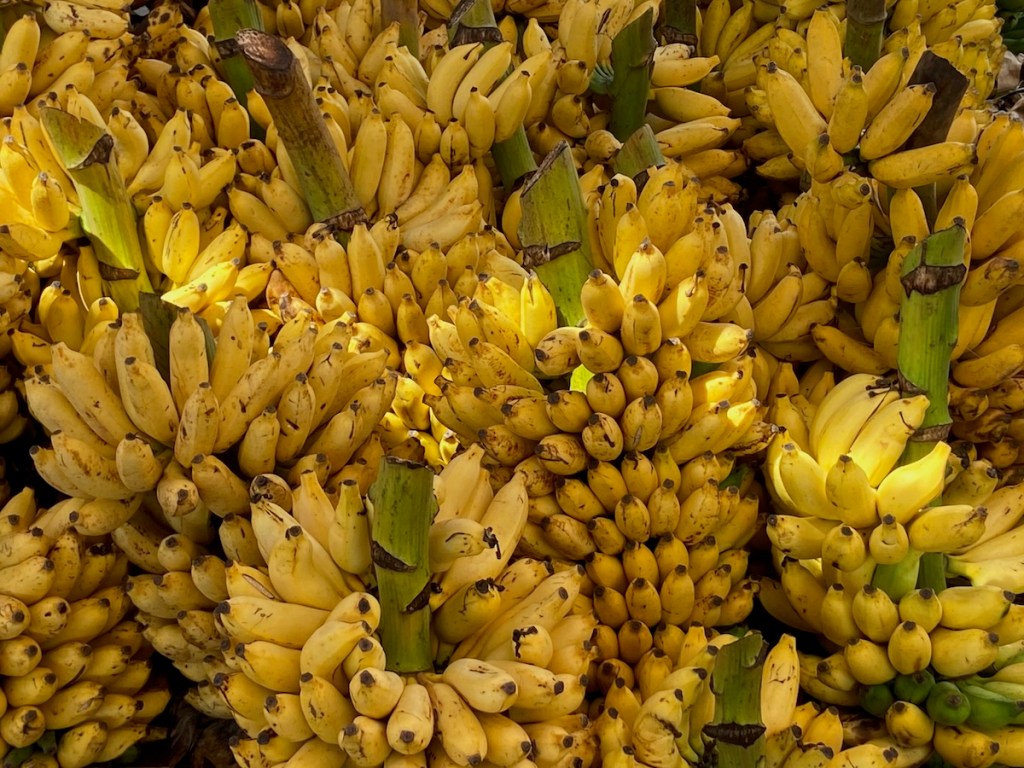
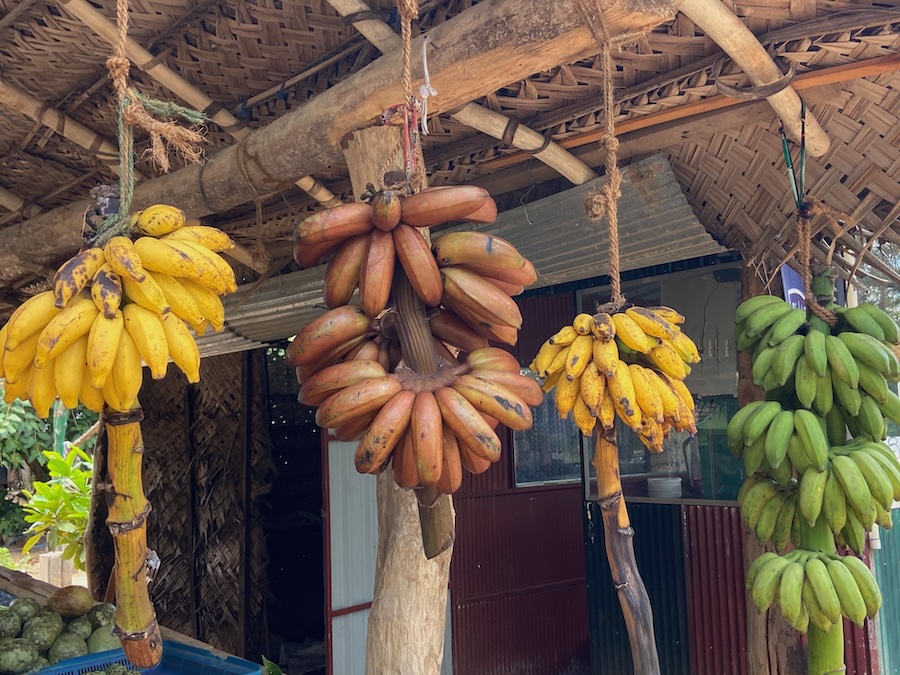
At least twenty nine varieties are grown in Sri Lanka. Fruit shops and roadside stalls offer a choice of different shapes, sizes and colours all hanging in huge bunches still on the main stem.
Bananas are packed with potassium, minerals and essential vitamins. A cheap superfood to eat every day.
All parts of a banana plant can be eaten except for the roots
The huge leaves can be cut and used as plates to either serve food on or to eat off, they can then be composted. Food, especially fish gains a gentle fragrance if wrapped in a leaf before steaming it. Or a simple packet can be made to wrap your food up in.

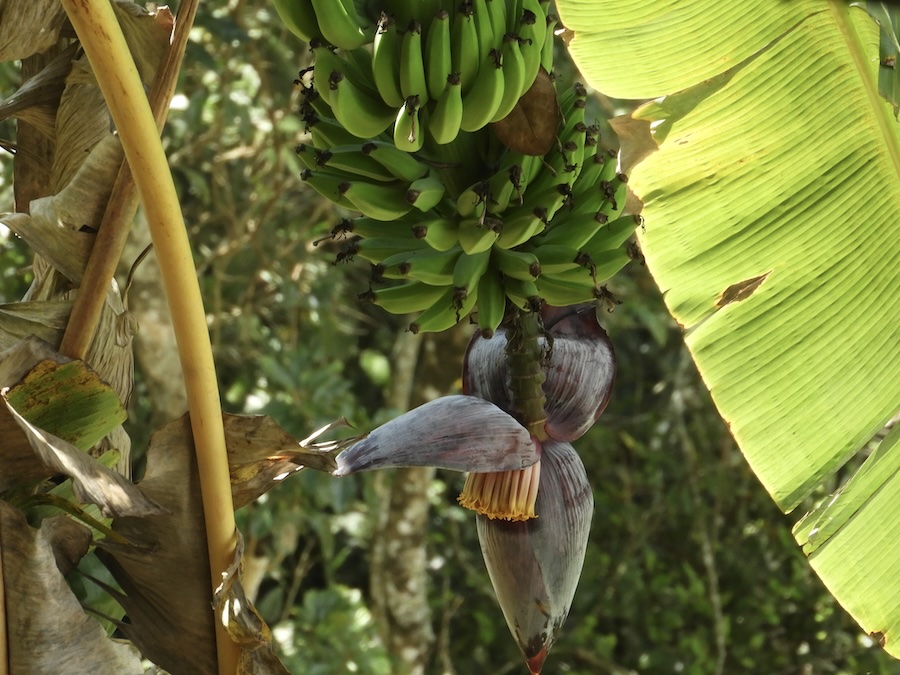
Banana flowers are also used to make delicious curries or stuffing for savoury rolls. There are many claims on the health properties of the flowers which are an alkaline food, which effectively neutralize the stomach acid secretions and provides respite from indigestion. By adding banana flower in your diet, it works as a natural remedy for dissolving painful kidney stones and it also help averts the risk of inflammation and urinary problems.
There are many uses for banana peel too. It can be rubbed onto to skin as a softener and moisturiser. It has many uses for the gardener too. Some examples are: Steep the peel in water for 48 hours then use as a nutrient rich ‘tea’ to water plants. Chopped peel can be added directly to the soil or added to the compost heap. Or you can soak banana peel in apple cider vinegar to create an organic insect trap.
The most popular varieties for eating are:
Ambul are small, slender and sharp-ended with a thin skin and a strong aroma. Slightly sour but very sweet all at the same time. They don’t keep for long as they ripen very quickly. I find they make wonderful banana muffins when over ripe. See recipe.
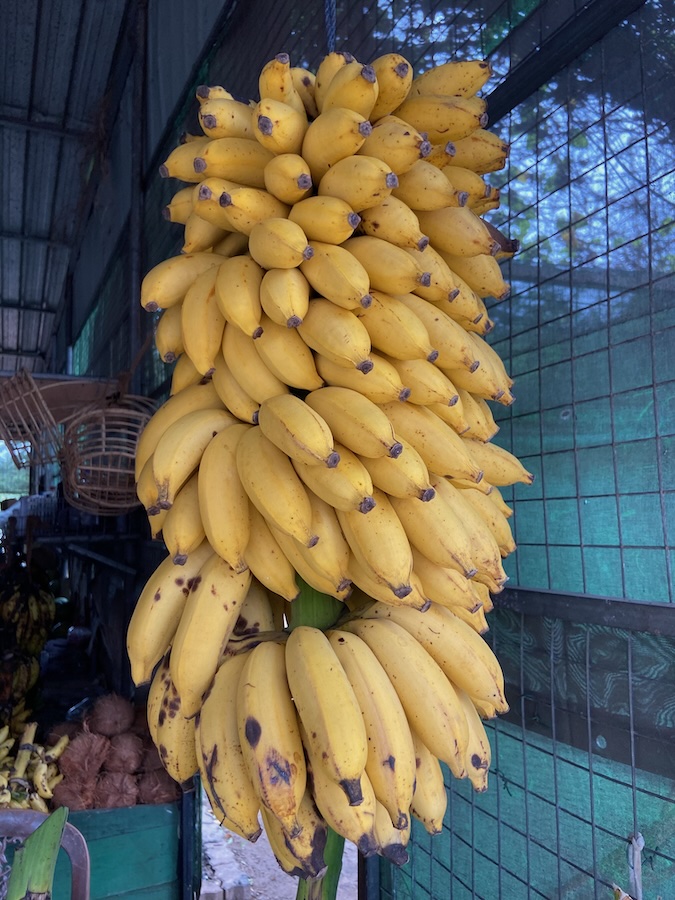
Seeni, similar in size to ambul but rounder and sweeter. The thin skin is rubbery, apple green colour when unripe and ripens to yellow, often dirty looking. These keep better as the skins are tougher.
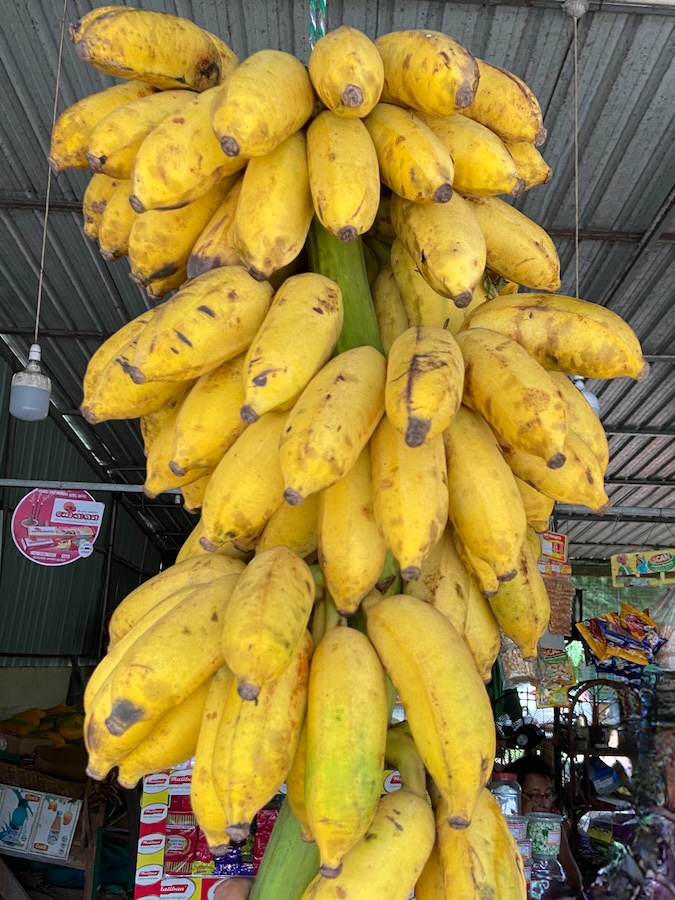
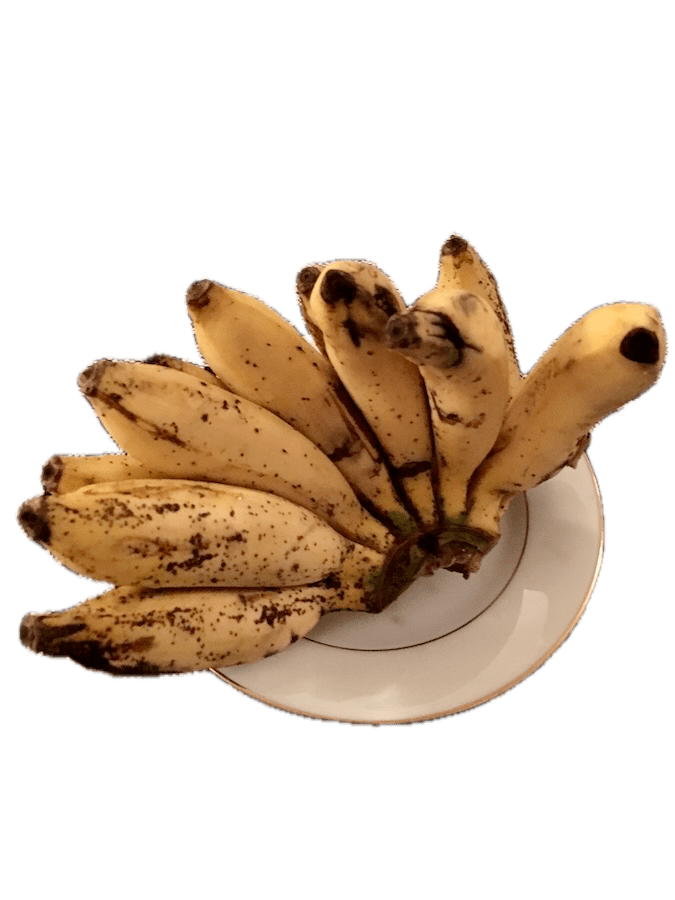
Kolikuttu and Suwendel are highly prized dessert varieties. Kolikuttus are small and chubby with creamy white flesh and are the choice for offerings and religious festivals. Suwendel have mustard yellow skin when ripe and are almost apple scented.
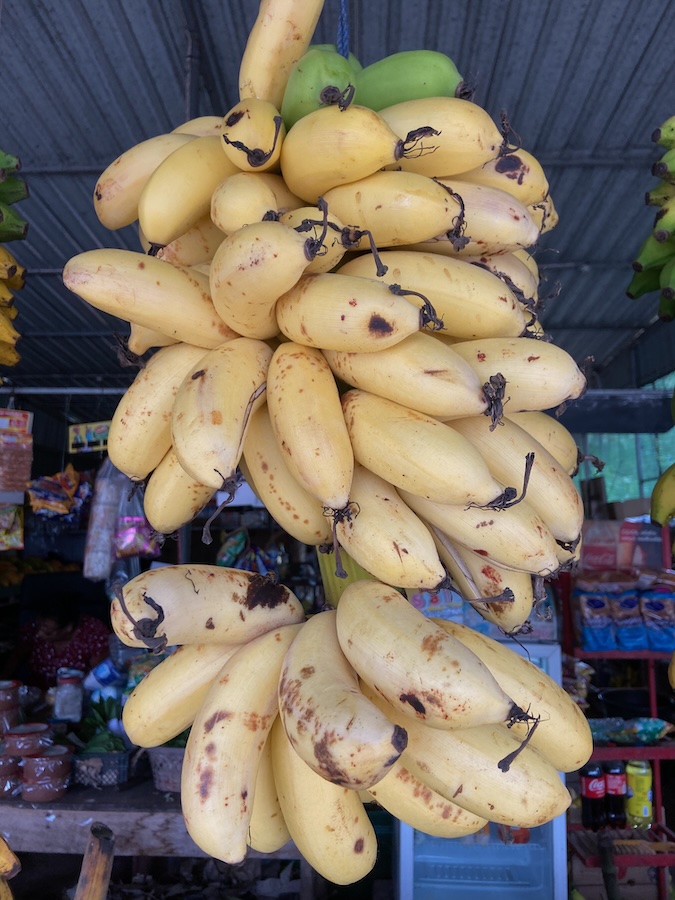
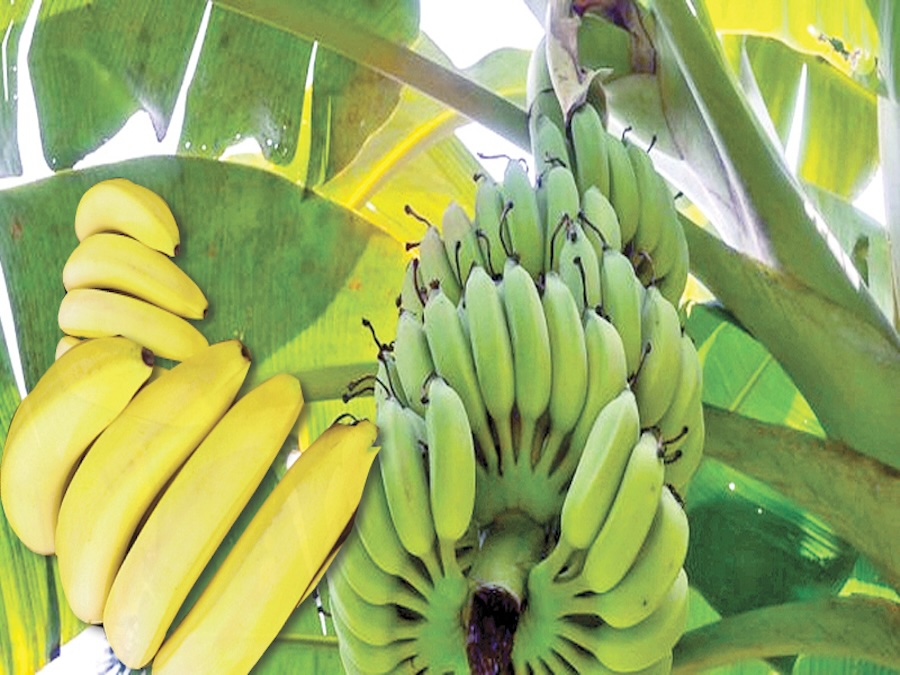
Rath Kesel are little bit bigger. Apple green when unripe, the skins gradually turn red with brown black markings when ripe. The flesh is sea foam yellow, not terribly sweet, but softer and sweeter than some banana varieties. A little bit more expensive but possibly my favourite.
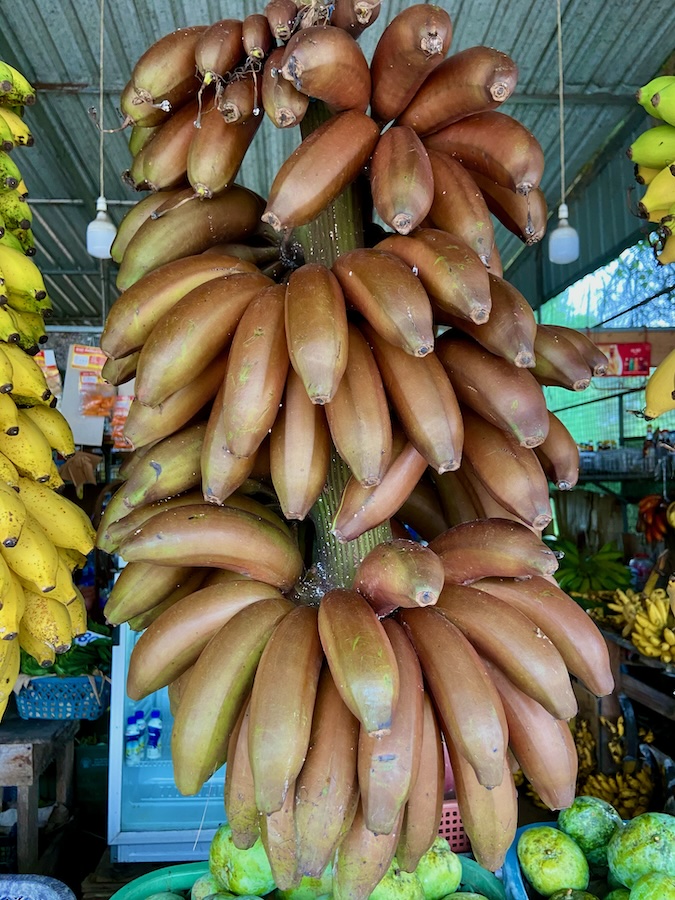
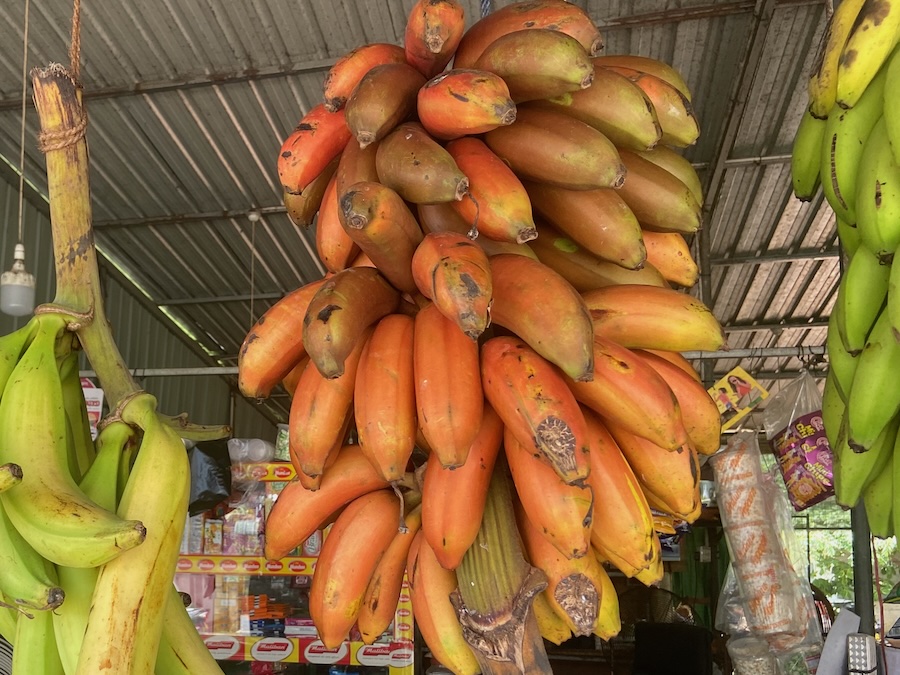
Anamalu is easily distinguished by its slender, long, curved shape. Its skin when rip is lemon yellow and relatively thick. The flesh is soft, ivory coloured and sour sweet on the tongue. It is well loved by athletes in Sri Lanka for its ability to generate a quick burst of energy. .It is also of particular use to those suffering from digestive problems. It is said that over ripe Anamalu can help stop diarrhoea, while under ripe Anamalu can help ease constipation.

Ambon is a dessert variety of excellent quality. Introduced from Malaysia in 1927. It is curved with relatively thick skin which is light green when unripe turning buff yellow at full ripeness. The flesh is maize yellow.
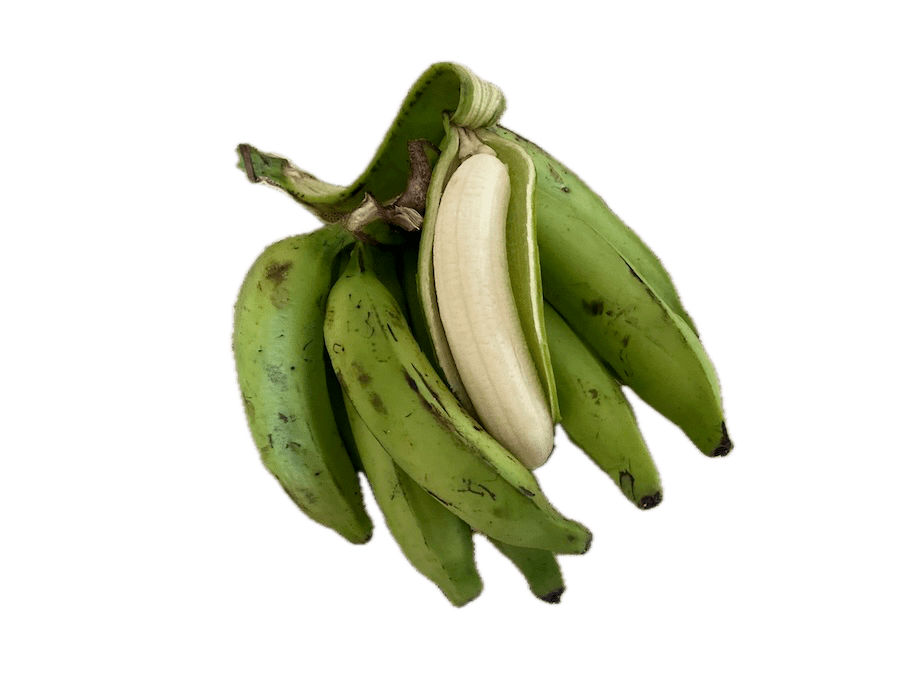
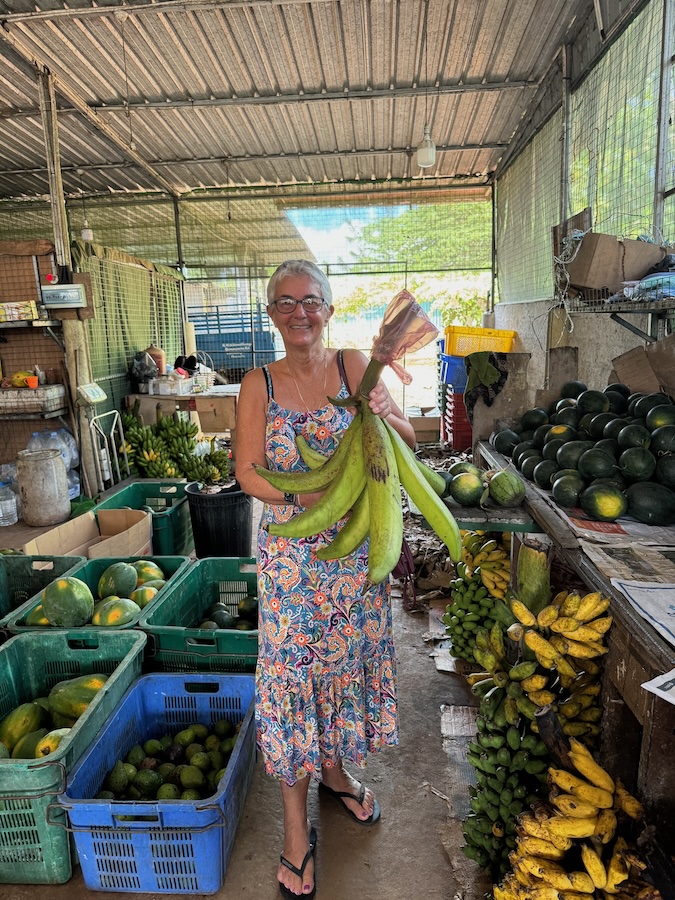
Nethrapalam and Angavira are less common varieties but unmistakable due to their huge size. Each banana could be up to 12 inches long and weigh between two to four pounds. One to share!

 Janet's Journal
Leave a reply to Martyn Cancel reply