
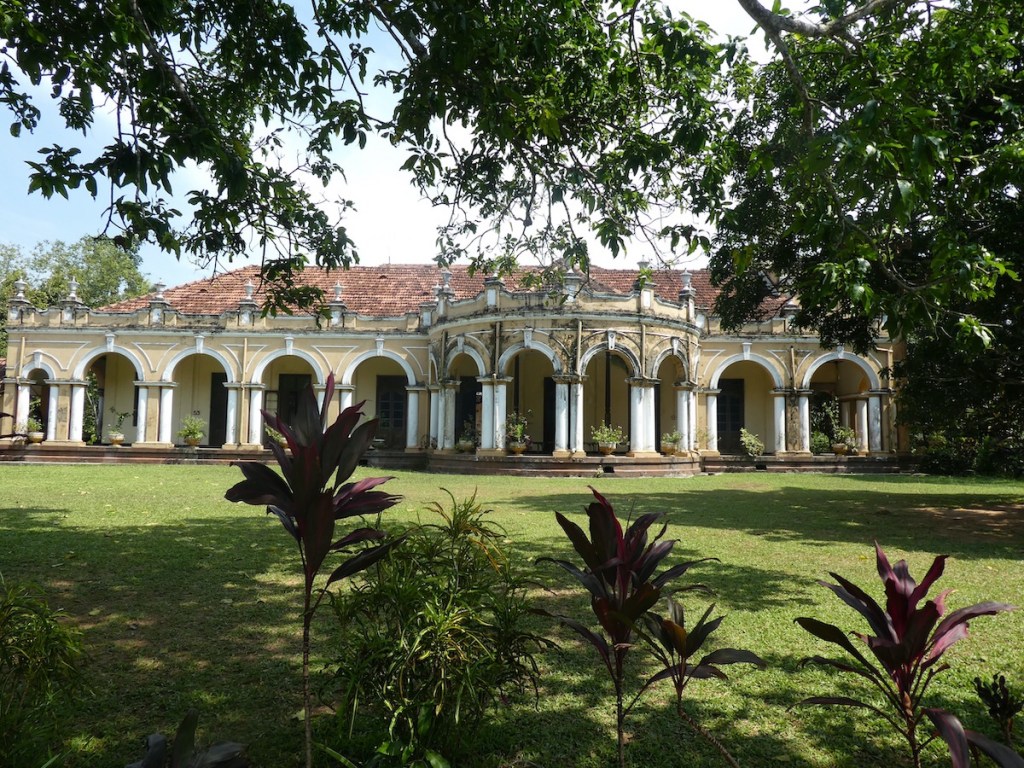
On top of a hill on the south bank of the Kalu River near Kalutara sits an imposing Edwardian mansion set in 42 acres of land. It was built by (take a deep breath) Padikara Mudali Nanayakkara Rajawasala Appuhamilage Don Arthur de Silva Wijesinghe Sriwardena.
Sriwardena was a wealthy landowner, he was friends with the British royal family. He studied in Britain, on completion of his studies he was created Mudaliyar by the King and returned to what was then Ceylon to take up his position. Mudaliyar was a Colonial title for a Headman.
One of Sriwardena’s school friends was Raja Rajeswara Sethupathi, the Raja of Ramnad in India. The story goes that Sriwardena asked for a copy of the building plans for Sethupathi’s castle, but he was refused on the grounds that Sethupathi thought the Ceylonese were incapable of such a large construction project. Not to be thwarted Sriwardena took two architects with him on a visit, and they secretly drew up plans.
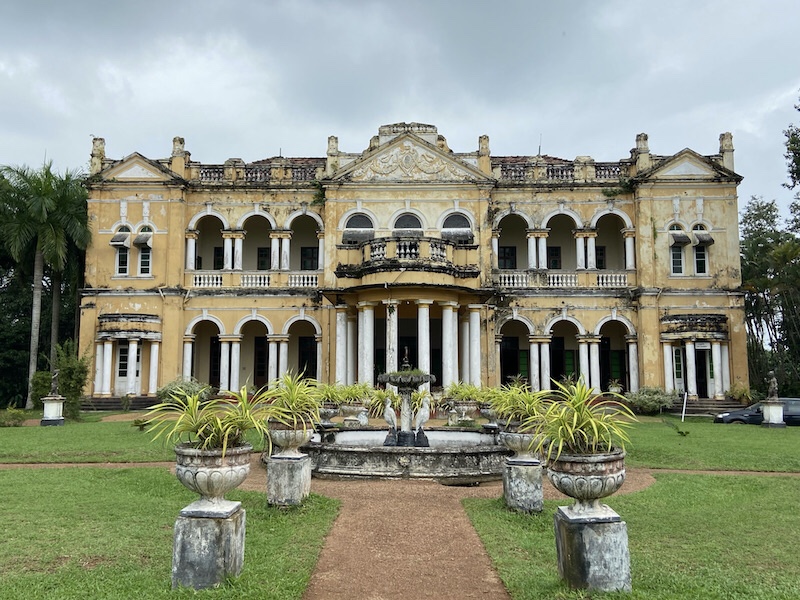
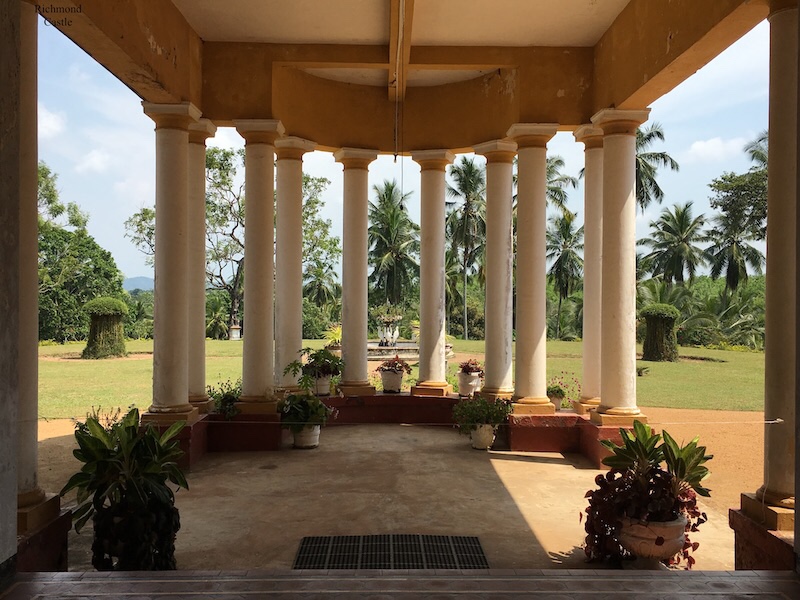
Richmond Castle is a two-storey building with sixteen rooms, ninety-nine doors and thirty four windows. Building materials were brough in from overseas.

Floor tiles and marble from Italy, teak from Burma for the main staircase, an iron spiral staircase and bathroom fittings from England, and windowpanes of Scottish glass.


An ingenious system for cooling the building was incorporated allowing air from outside to circulate through the rooms.
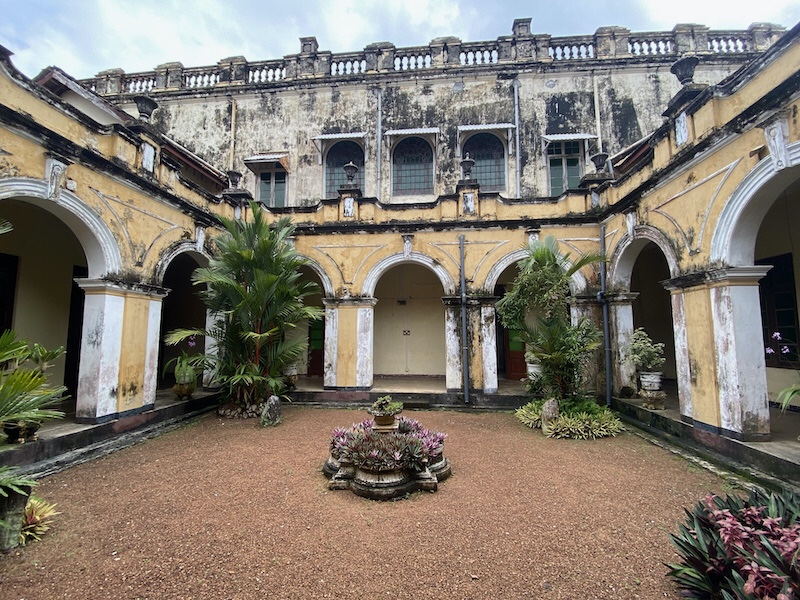
The castle was completed in 1910 to host the wedding of Sriwardena to Clarice Suriyabandara. Railway track was laid to ferry the representatives of King George V and the social elite of Colombo from Kalutara on a royal train. The wedding was a grand affair complete with spectacular fireworks.
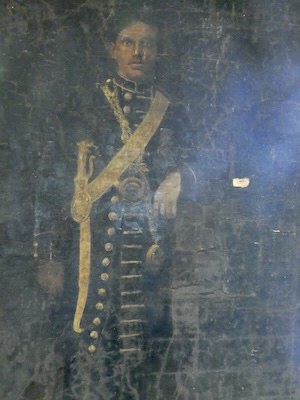
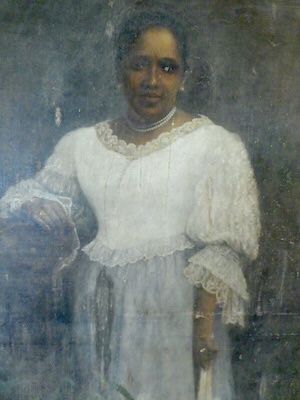
The one thing the Mudaliyar wished for most of all was a son and heir. Sadly, this was not to be and after over 30 years together the couple separated. Clarice moved back to her family and Sriwardena spent the rest of his years living in Queen’s Hotel, Kandy.
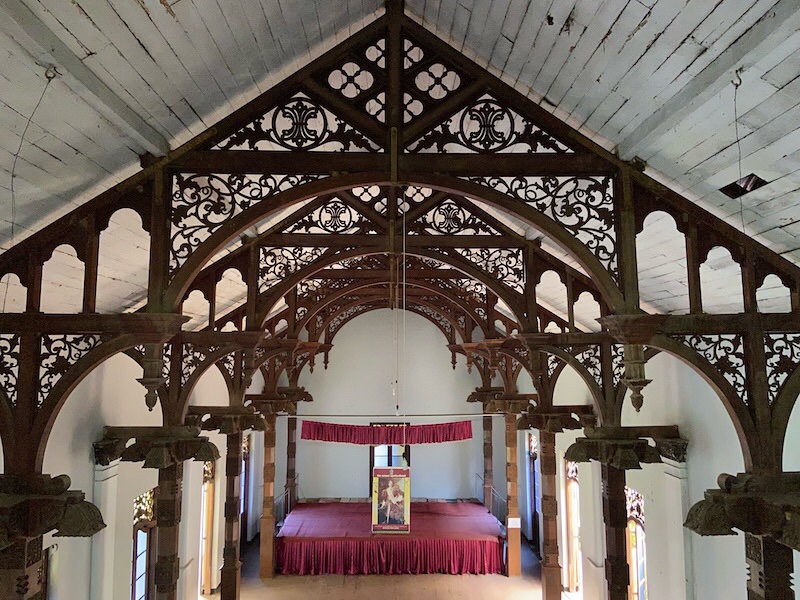
He bequeathed the mansion to the Public Trustees Department of the government to be used as a male only children’s home. The main building is undergoing renovation and the main room is used for conferences and administration. Outbuildings are still lived in by boys who are orphaned.
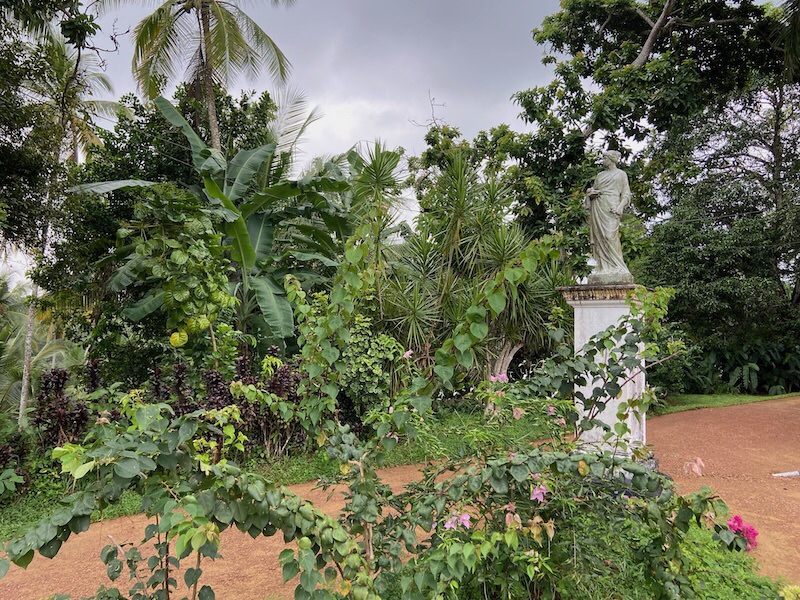
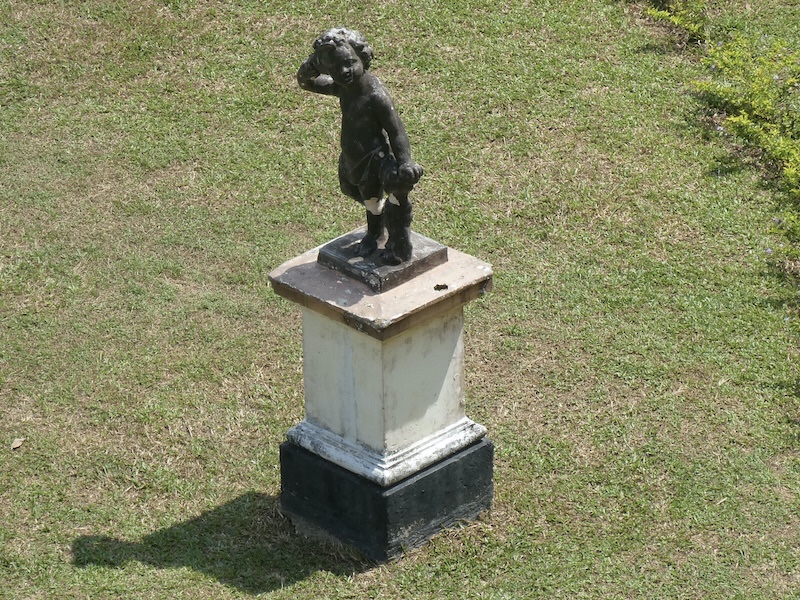
The formal gardens still exist. A forlorn statue of a woman looks away from the house while statues of two small children, one of whom is a boy look towards the house.
Well worth a visit, a guided tour is included in the modest Rs500 entrance fee.
 Janet's Journal
Leave a reply to Martyn Boddy Cancel reply