
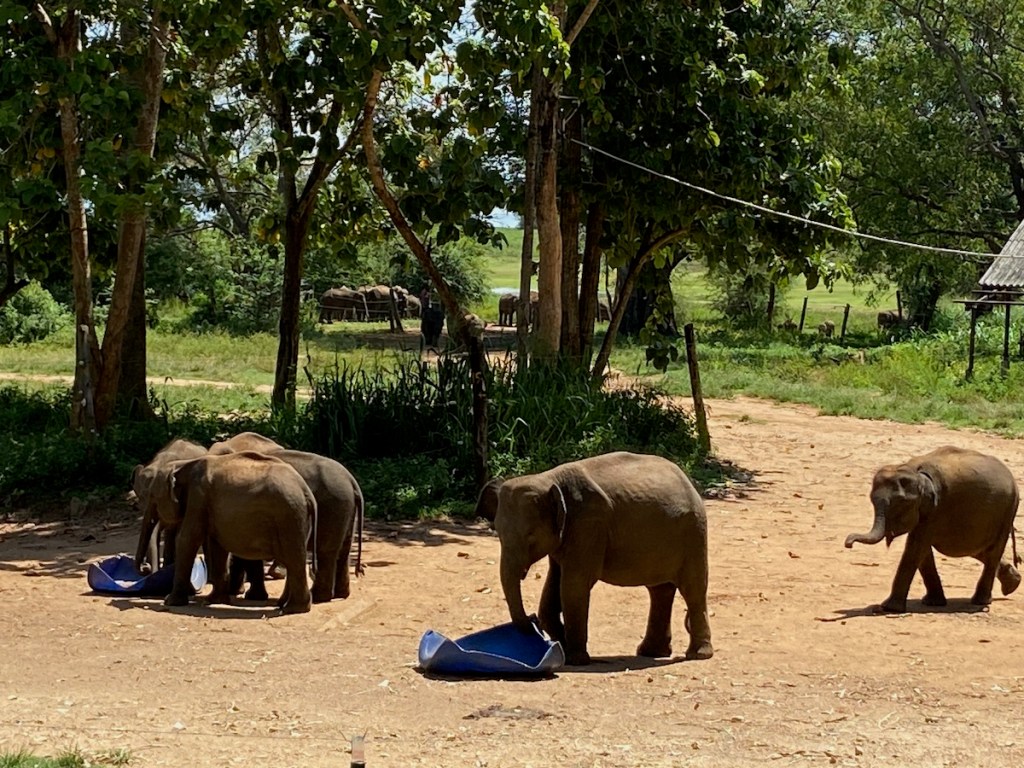
An orderly queue is forming by the gate on the far side of the feeding area. In the enclosure opposite, the anticipation of the seated audience is evident. At the appointed time the gate is opened and the first group of elephants trot excitedly up to get their milk.
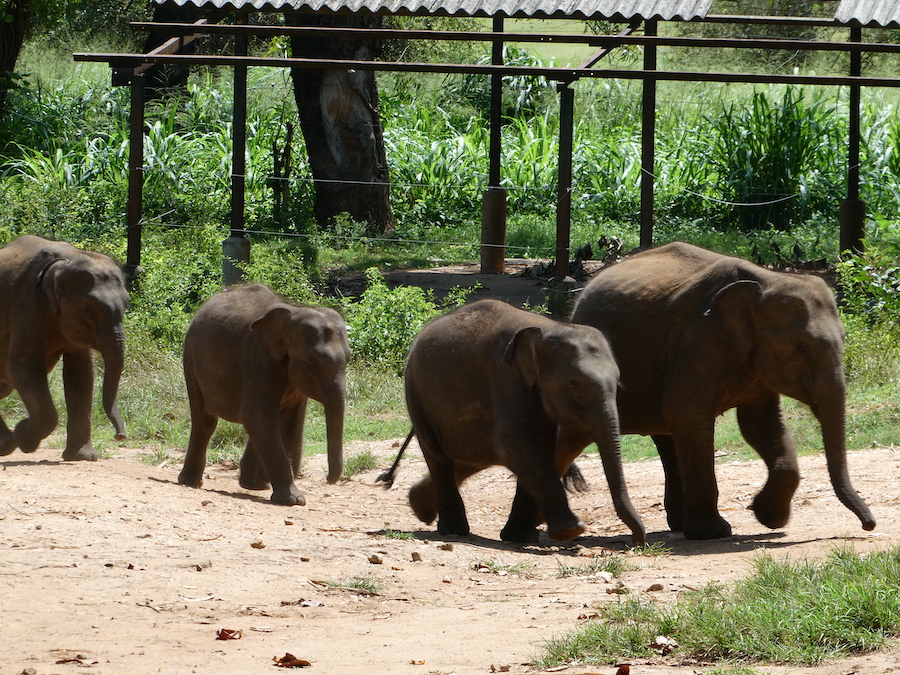
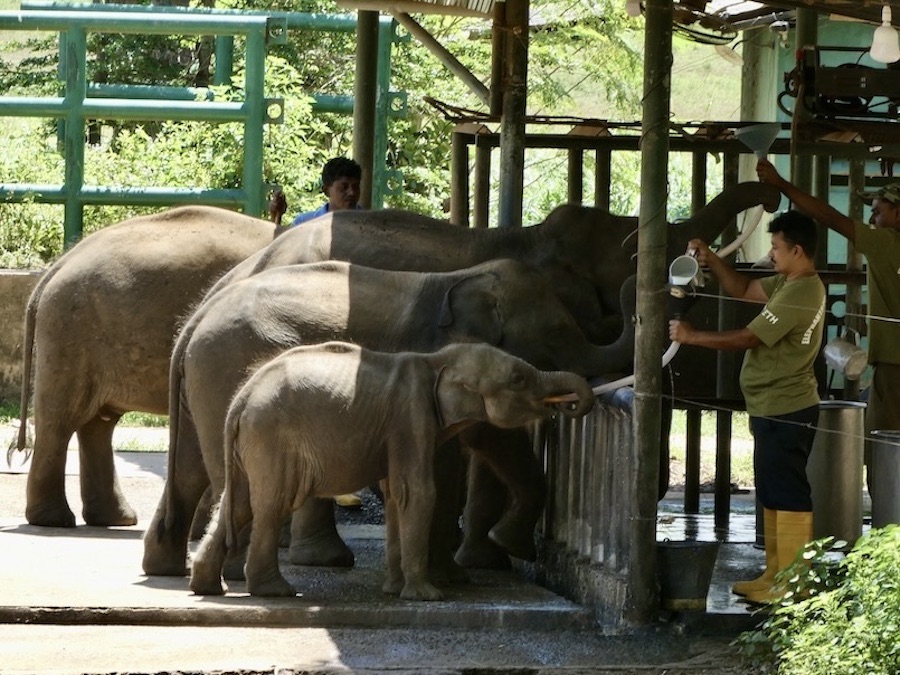
The smallest babies are fed from a bottle everybody else has milk poured into a tube straight into their mouths.
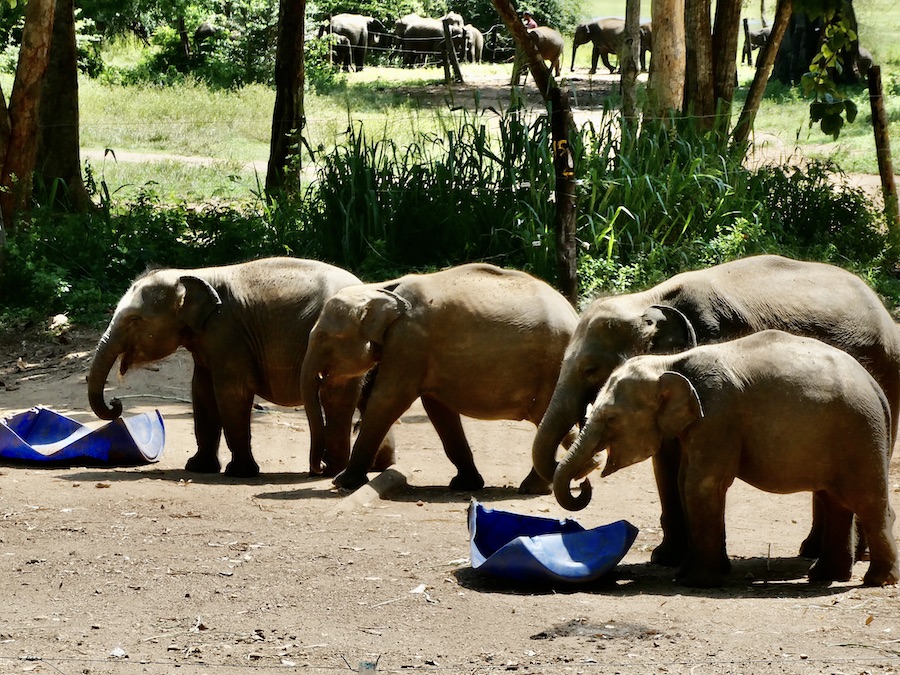
After their milk they obediently step back and trot over to some big blue troughs which contain more food and a lot more pushing and shoving starts.
A loud angry trumpeting resounds around the area as one youngster demands a second helping of milk which is smilingly given, and he departs to seek more solid food.
When everybody has had their share, including two or three older elephants who have injuries, then second helpings are offered to all.
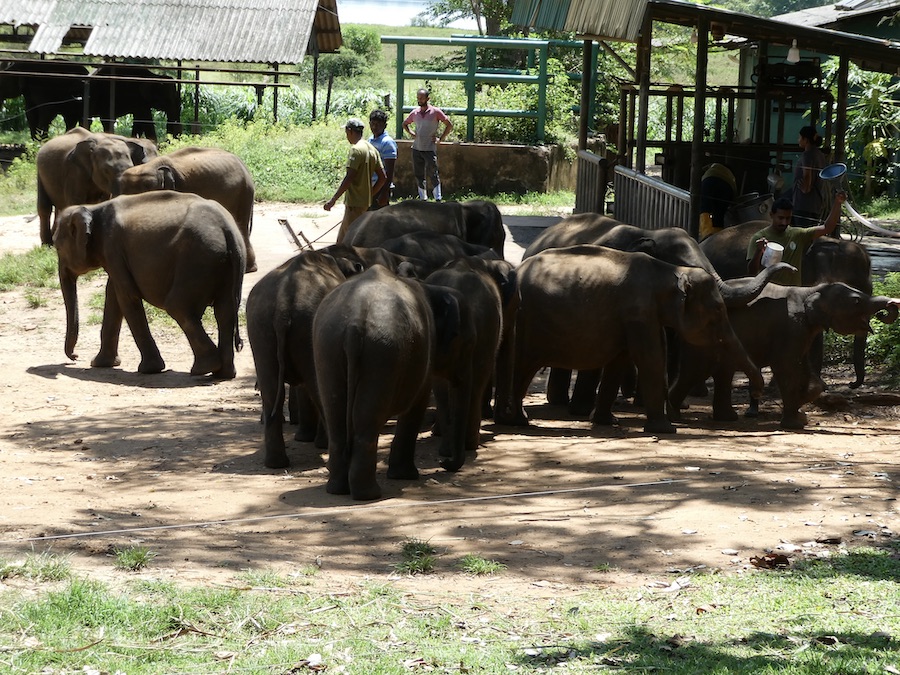
After all tummies are temporarily full the young elephants gradually wander back to the gate and out into the National Park where they are free to roam until the next feeding time.
They are fed every three hours, each calf needing 11.5 litres of milk per day. After much trial and error, it has been found that human formula baby milk is the best for them. With more than 50 hungry calves to care for the whole affair is run with military precision, otherwise the wails and cries are pitiful to hear. Donations to help buy sufficient milk powder are always gratefully received.
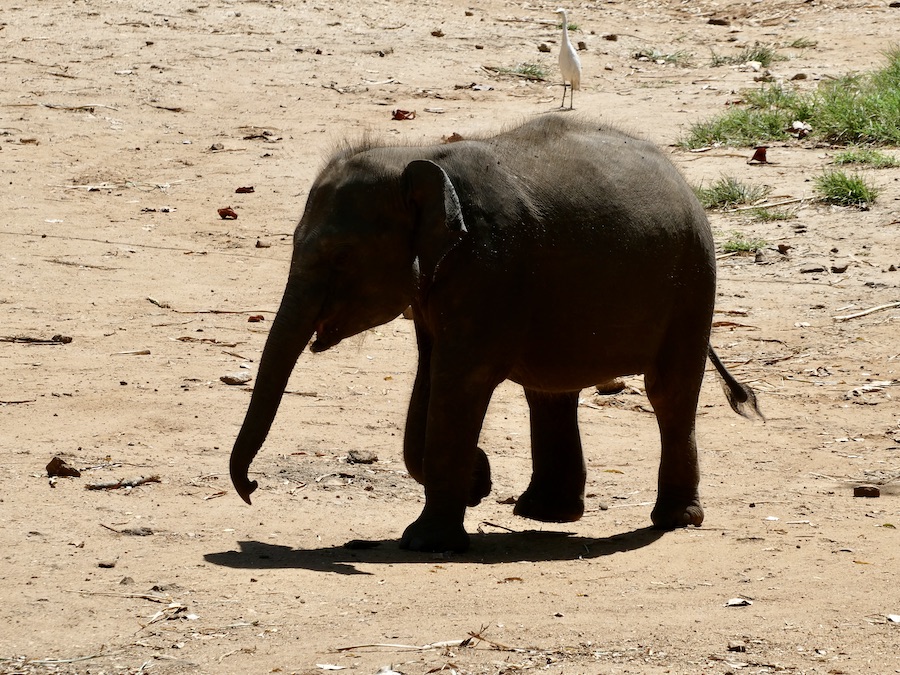
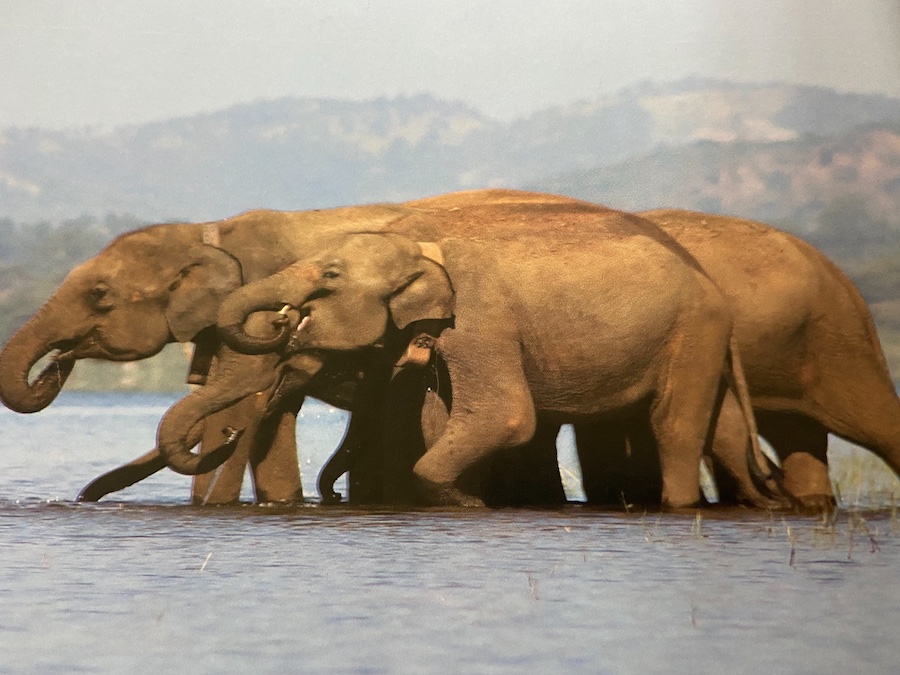
The Elephant Transit Home was founded in 1995 by the Department of Wildlife Conservation in Sri Lanka as a rehabilitation centre for orphaned baby elephants, and occasionally an injured older elephant. The elephants are loving cared for until they are five years old after which they are released into the wild. Radio collars are fitted to help wildlife officials to monitor their movements, progress, and behaviour.
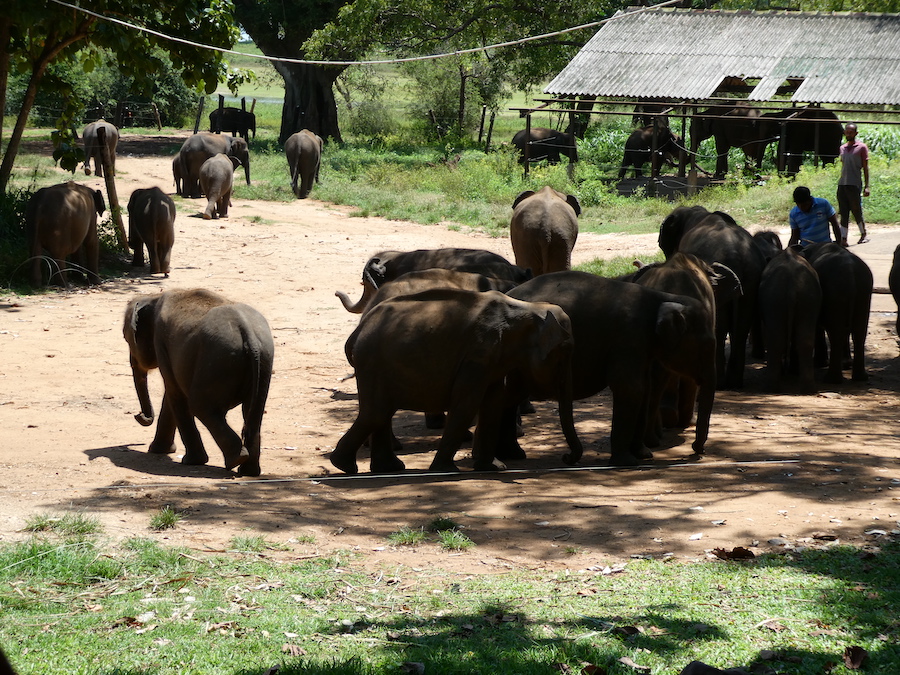
The ETH is on the western border of Udawalawe next to the reservoir. The calves have no boundaries and are free to roam wherever they choose and mix with other wild elephants in the area.
All care is given by trained staff and contact between the elephants and humans is kept to the barest minimum. No volunteers or interaction with the public is permitted which helps to avoid the animals becoming too attached to humans.
Before being released into the wild the elephants are given a bath in elephant dung to ensure any residual human smell is eliminated helping them to be accepted into a wild herd.
More than two hundred elephants have been successfully rehabilitated into the wild in several different reserves since the ETH opened.
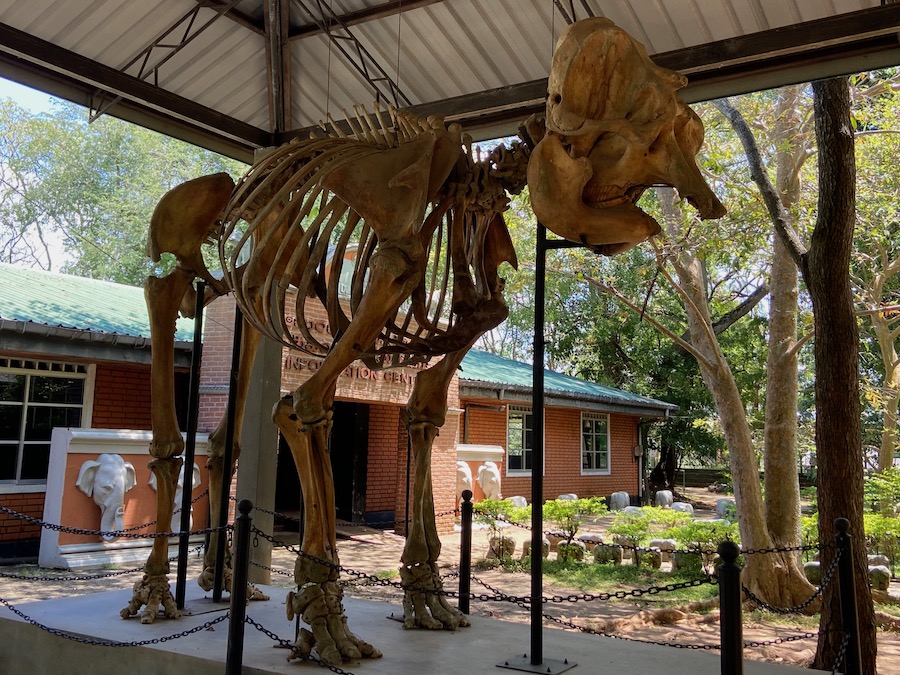
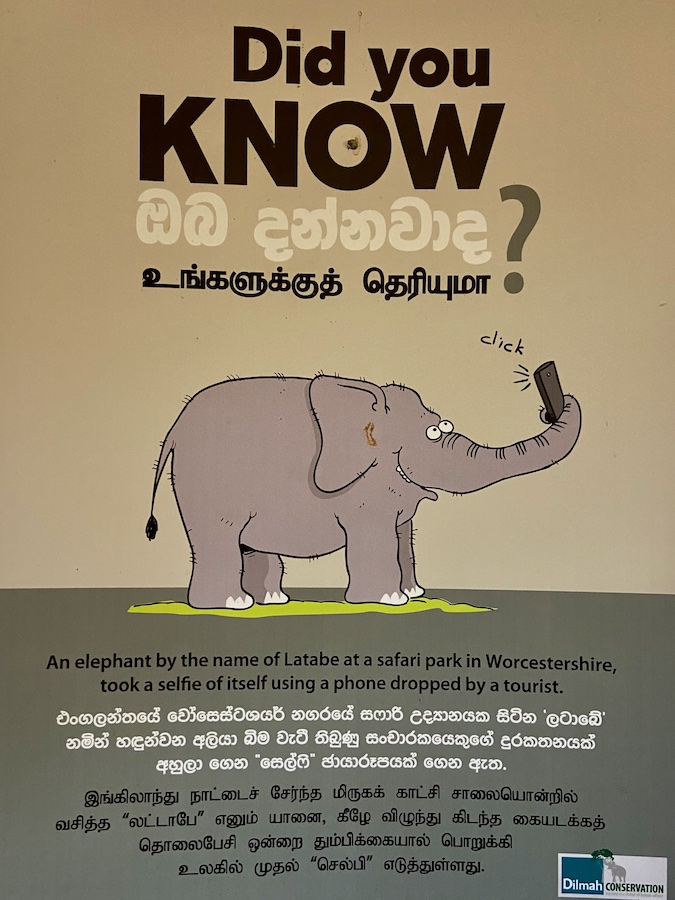
The Elephant Transit Home is open to the public every day at feeding times. A charge of $5 per person (foreigners) and LKR200 for locals is made, this includes the Information Centre which is full of interesting facts.
There is plenty of car parking and good toilet facilities on site.
 Janet's Journal
Leave a comment