
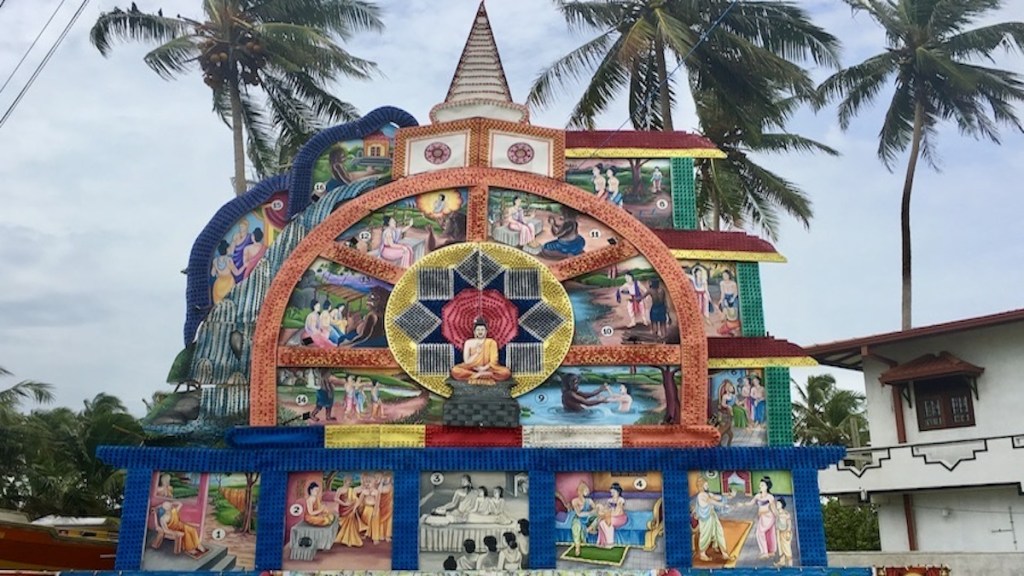
Hikkaduwa in September
I decided to spend a week in Hikkaduwa. I have been on several train journeys here before, but always in a reserved seat carriage. This next journey was to be a whole new experience.
Being unable to find out train times in advance I arrived on the platform in busy Colombo Fort Station at the time the train was due to leave. It was, needless to say, jam packed full, so I stepped back—only for someone to grab my bag, and two others to grab me! After the initial shock I realised that my bag and I were safely reunited on the train, which by now was pulling out of the station.
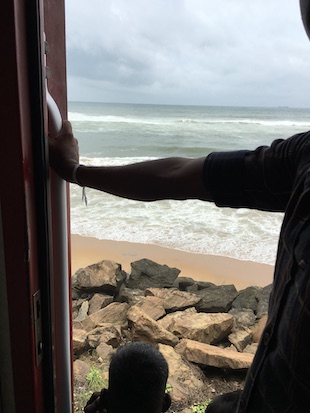
A good deal of manoeuvring followed before I found myself on the other side of the carriage, just one person away from the open door. No need to worry about holding on to anything—I was wedged firmly upright and facing the ocean for the next two hours. The view was stunning, but the sea breeze blowing in did nothing to cool me down.
Vendors selling small cups of hot sweet tea, spicy snacks or diced pineapple somehow managed to move through the train hawking their wares. I was so grateful that I had brought a large bottle of water!
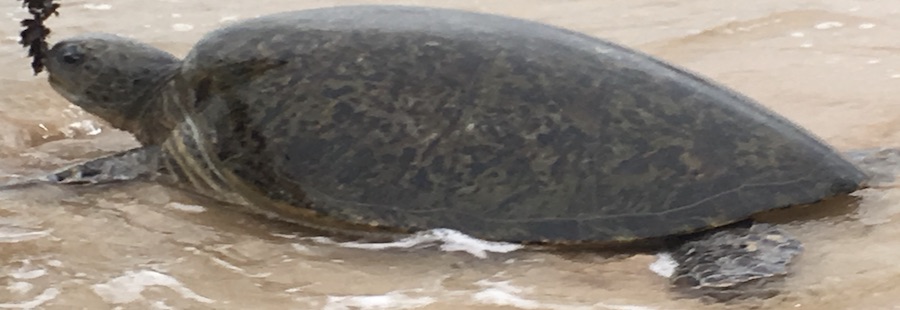
Hikkaduwa has a series of smaller beaches which are sheltered and pleasant to swim from. I was lucky to see two or three turtles very close to the beach, then realised how big they were and didn’t want to bump into one while swimming.
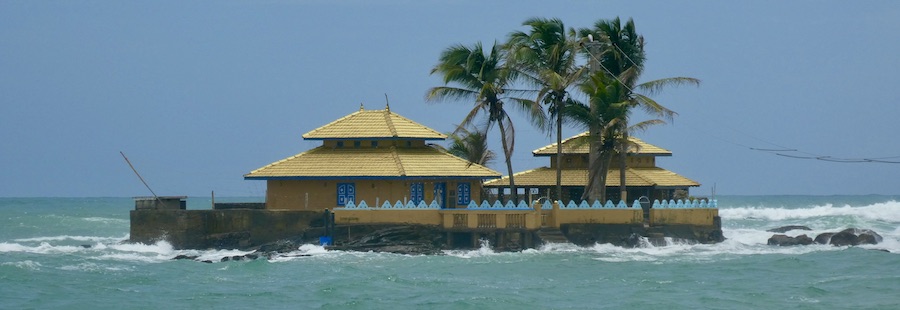
Just outside town at Seenigama there is Temple on tiny island just off the shore. I declined to take an overpriced boat trip out to visit and took photographs from the shore.
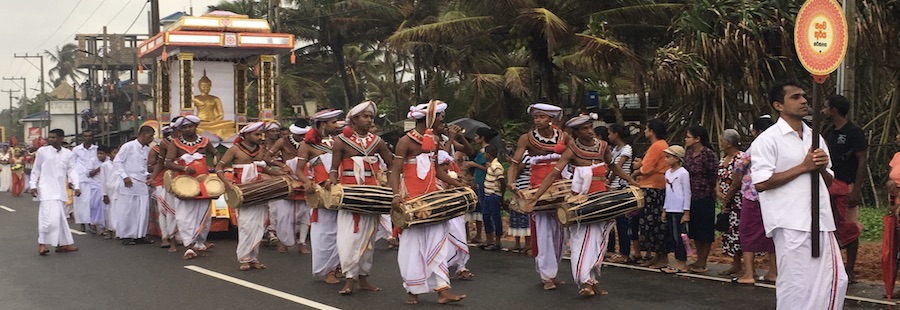
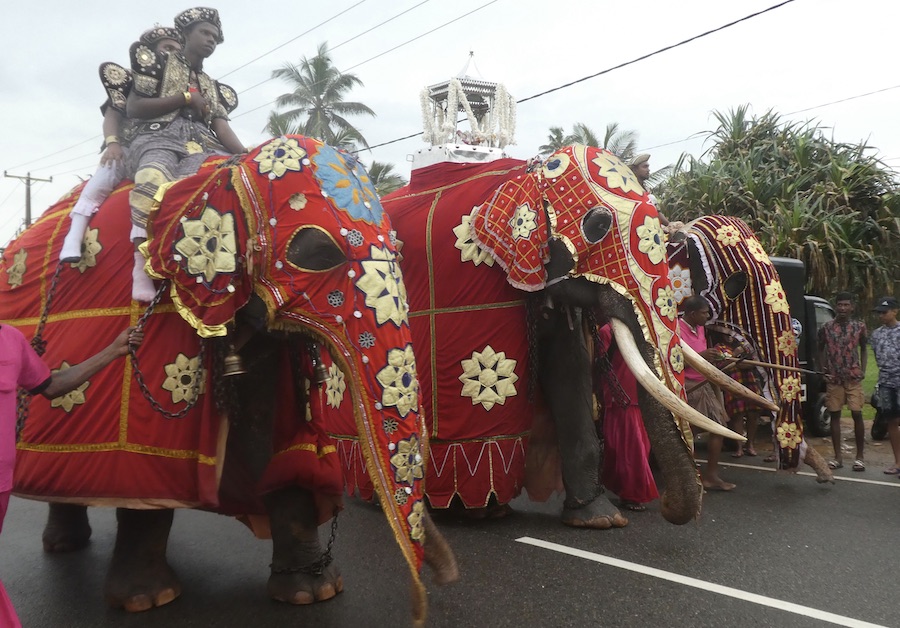
The weather stayed unpredictable, lots of heavy rain showers. The Kandy Perehara is the biggest on the island and the Hikkaduwa Perehara is one of the next largest. Torrential rail delayed the start of the 3 mile long parade. I felt sorry for some of the performers in their beautiful costumes and make up but they kept going.
A short bus ride up the coast is the Tsunami Honganji Vihara.
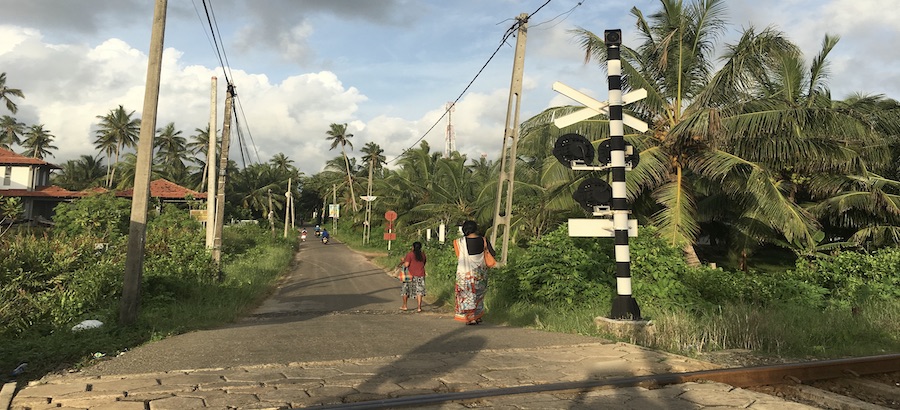
On the 26 December 2004 the tsunami hit the coast of an unsuspecting Sri Lanka. Here the wave went over the top of the palm trees, swept inland, ripped a train and its track up killing not only the passengers but also the villages who had taken refuge behind it and rushed inland for a further 3 kilometres.
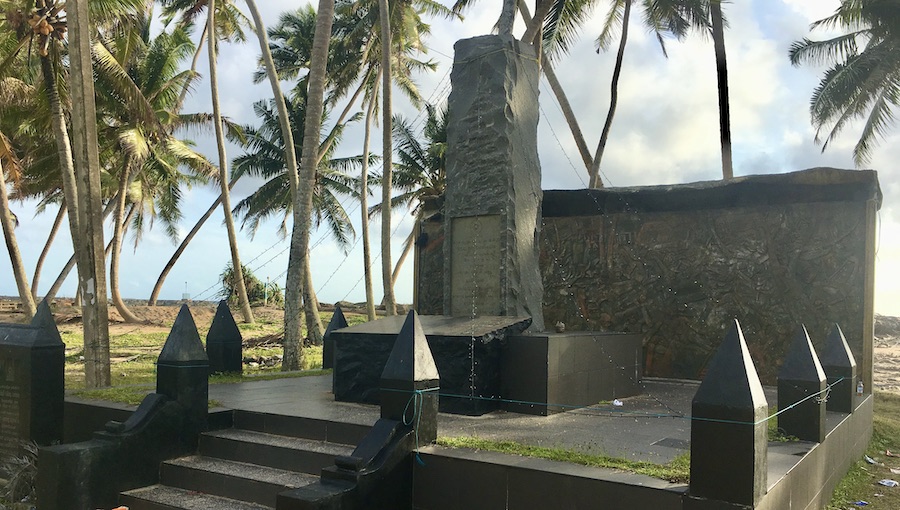
Two years later this beautiful monument, gifted by the Japanese temple in Kyoto, was officially opened to remember the more than 2,000 who died.
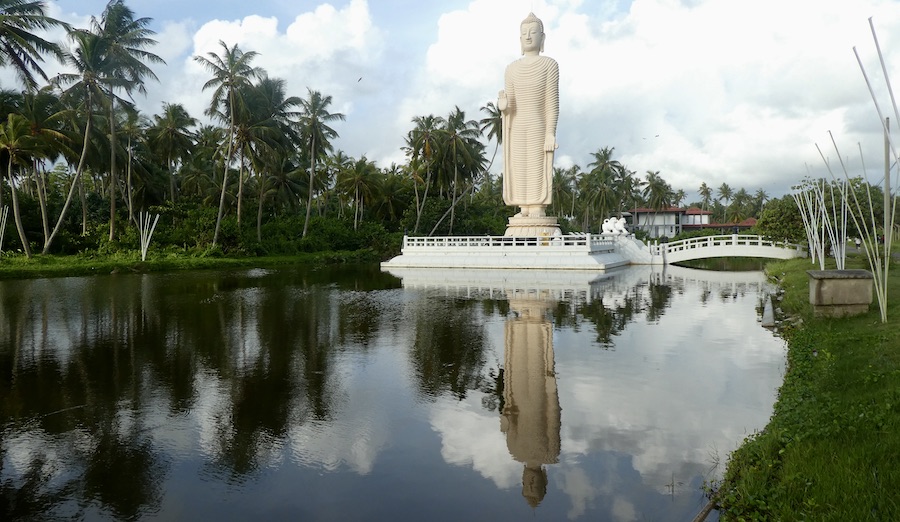
The Buddha statue is 8 metres high, the height of the wave. There is a small museum run by a survivor of the tragedy.
 Janet's Journal
Leave a comment